

Over the past few days, I’ve been following a series of developments in the financial markets that have left me with quite a few questions. It started with the controversy surrounding Jensen Huang’s personal life, followed by reports of his resignation as Nvidia’s CEO and a sharp reaction in the company’s stock price. Around the same time, the latest US inflation figures came out, expectations of another Federal Reserve rate hike in December grew stronger, and cryptocurrencies such as Bitcoin and Ethereum experienced some pretty heavy losses.
At first glance, these stories don’t seem to have much in common. Huang’s resignation raises questions about corporate leadership and reputation, inflation affects interest rates and the broader economy, while the crypto market has its own problems with leverage, liquidity, and investor sentiment.
Still, seeing all of this unfold within just a few days made me wonder why so many different parts of the market were coming under pressure at roughly the same time. Were there underlying factors connecting these developments, and how long had those pressures been building before they became visible?
I’ve always felt that events rarely come out of nowhere. By the time something makes the headlines, the circumstances behind it may have been developing for months or even years. We tend to notice the moment something happens, without necessarily seeing everything that led up to it.
Jensen Huang’s Departure Raises Questions Beyond Nvidia’s Leadership
On November 8, Jensen Huang publicly acknowledged an extramarital affair and apologized to his family and employees. Just a few days later, on November 12, Nvidia announced that he had resigned as president, CEO, and a member of its board of directors. The company’s former CFO, Colette Kress, was appointed interim CEO.
According to Nvidia’s official announcement , the company intends to continue with its existing technology roadmap and customer commitments while the board searches for a permanent successor.
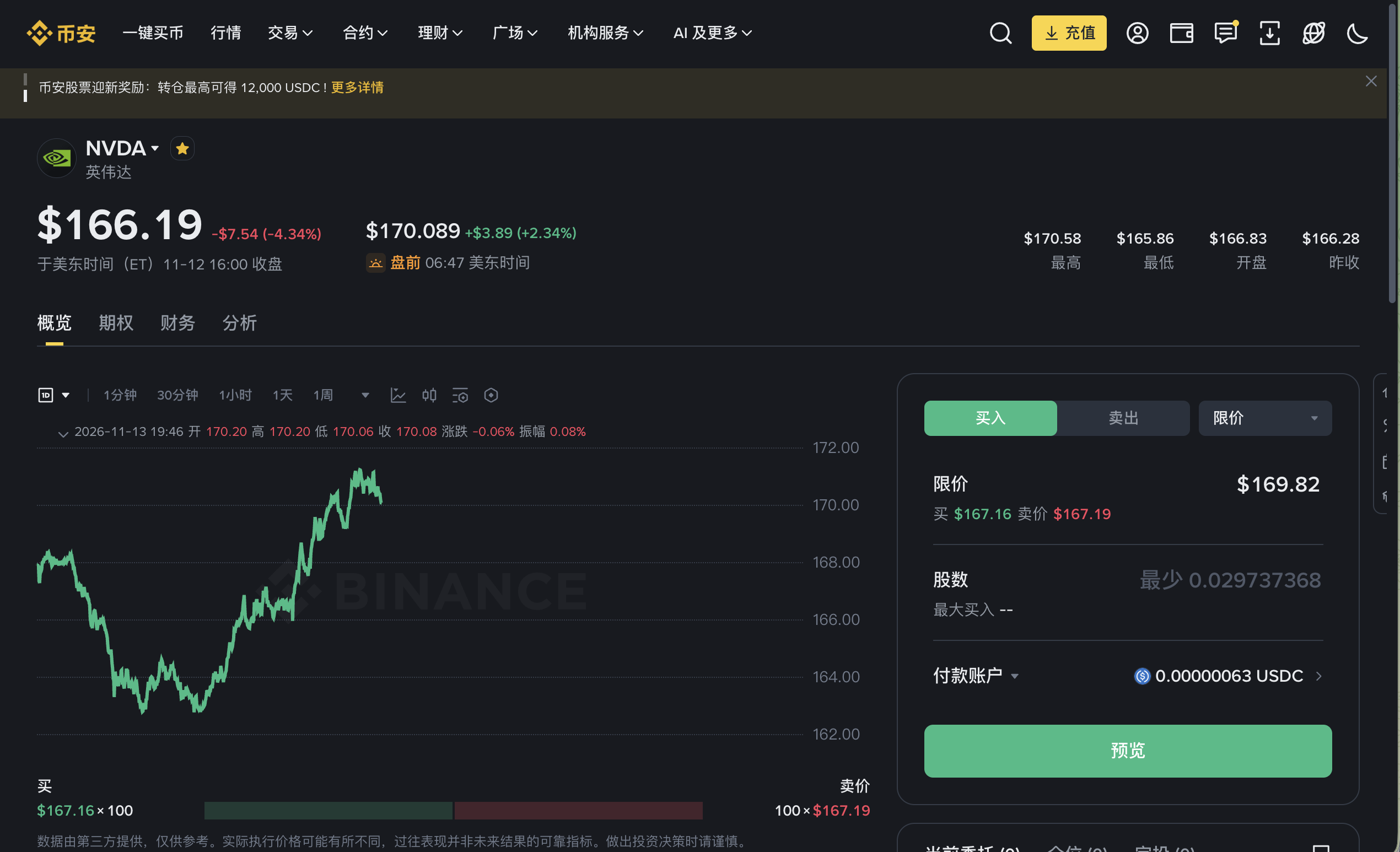
The entire sequence unfolded in less than a week. For a company that had been led by the same founder for more than three decades, it was hardly surprising that investors reacted. Nvidia shares fell more than 4% on November 12, after a considerably steeper decline earlier in the trading session, while several companies connected to AI infrastructure also came under pressure.
I’m not particularly interested in judging Huang’s private life. His personal decisions don’t erase what he has contributed to Nvidia or to the development of modern computing. At the same time, when personal conduct raises questions about corporate responsibilities, conflicts of interest, or internal accountability, it becomes difficult to treat it as an entirely private matter.
What interests me more is why the sudden departure of one person could create so much uncertainty around a company that has been operating for over thirty years.
Huang has played an unusually important role in Nvidia’s development, from graphics processing and accelerated computing to the AI infrastructure business that has made the company so influential today. Investors have been buying into Nvidia’s products, earnings, and competitive position, but many have also placed considerable trust in Huang’s leadership and judgment.
Yet Nvidia is much more than its founder. It has thousands of engineers, an established CUDA software ecosystem, longstanding relationships with major customers, and years of accumulated technical expertise. None of that disappears simply because the CEO leaves.
What investors now have to consider is whether the next leadership team can maintain the company’s direction, whether its investment and partnership strategies might change, and how those decisions could affect Nvidia’s competitive position over the coming years.
AI’s Real Value and the Price Investors Are Willing to Pay
In October, I wrote about the growing excitement around artificial intelligence in What Exactly Is the AI Bubble? When Everyone Seems to Be Getting Rich With AI .
At the time, I wasn’t only thinking about the valuations of large technology companies. I was also thinking about how easily people have come to associate AI with making money, and whether the improvements in productivity that AI promises are actually translating into sustainable income for ordinary people.
I use AI regularly in my own work, and it has helped me do things that would have been much harder to manage on my own. But I’ve also learned that being able to work faster, or having access to more powerful tools, doesn’t automatically mean earning more money.
I think something similar is happening in the financial markets.
AI has already demonstrated that it can be genuinely useful. Businesses are using it to process information, develop products, improve customer services, and handle tasks that previously required considerably more time. But the fact that a technology has long-term potential doesn’t mean every company involved will generate the profits investors are expecting.
AI infrastructure is particularly expensive to build. Advanced chips, data centers, electricity, cooling systems, and networking equipment all require substantial investment, often long before the companies involved can know exactly how much revenue those projects will generate.
Nvidia sits at the center of much of this spending. It supplies the hardware that supports AI development and also has investment relationships and commercial partnerships with companies building AI infrastructure. If investors become uncertain about Nvidia’s future strategy, it makes sense that they might also reconsider some of the businesses whose growth depends on continued investment in AI computing capacity.
It reminds me of the dot-com era. Around 2000, many internet companies saw their valuations collapse, and some disappeared completely. But the internet itself continued to develop and eventually became part of almost everything we do.
I’m not suggesting that AI will follow the same path. The businesses, technology, and economic conditions are different. Still, that period offers a useful reminder that a technology can have enormous long-term value even when investors have become too optimistic about how quickly it will generate returns.
Nvidia’s falling share price doesn’t prove that something is wrong with AI’s future. It does, however, give us a reason to ask whether the expectations built into AI-related valuations have moved ahead of what the industry can currently deliver.
Inflation and Interest Rates Are Adding Another Layer of Pressure
While the Nvidia story was unfolding, the latest US inflation report gave investors something else to think about.
According to the US Bureau of Labor Statistics report released on November 10 , consumer prices rose 0.4% in October, compared with 0.6% in September. Core CPI, which excludes food and energy, increased by 0.3%, suggesting that inflationary pressure had not entirely eased.
For households, inflation is something people notice in everyday expenses. For businesses and investors, it also affects expectations about borrowing costs, future interest rates, and the value of financial assets.
Following the report, expectations of another Federal Reserve rate increase in December grew stronger. The Fed had not yet made its final decision, but financial markets were already adjusting to the possibility of higher rates.
This matters for AI because building the infrastructure behind it requires a remarkable amount of capital. A company financing a new data center has to consider not only the cost of servers and chips, but also the interest it pays on borrowed money and how long it might take for the project to become profitable.
When borrowing becomes more expensive, some investments that previously looked attractive may need to be reconsidered. Large technology companies with strong cash flows may be better positioned to absorb those costs, while businesses that depend heavily on outside financing could face greater pressure.
That’s why I don’t think Nvidia’s recent share price movement can be explained by Huang’s resignation alone. The leadership uncertainty matters, but so do the wider economic environment, the cost of capital, and the expectations investors already had about AI growth.
When several concerns emerge around the same time, markets can react more sharply than they might to any one of them individually.
Why Was Crypto Falling So Hard at the Same Time?
The cryptocurrency market has been another part of this story that caught my attention, particularly because of how quickly prices moved.
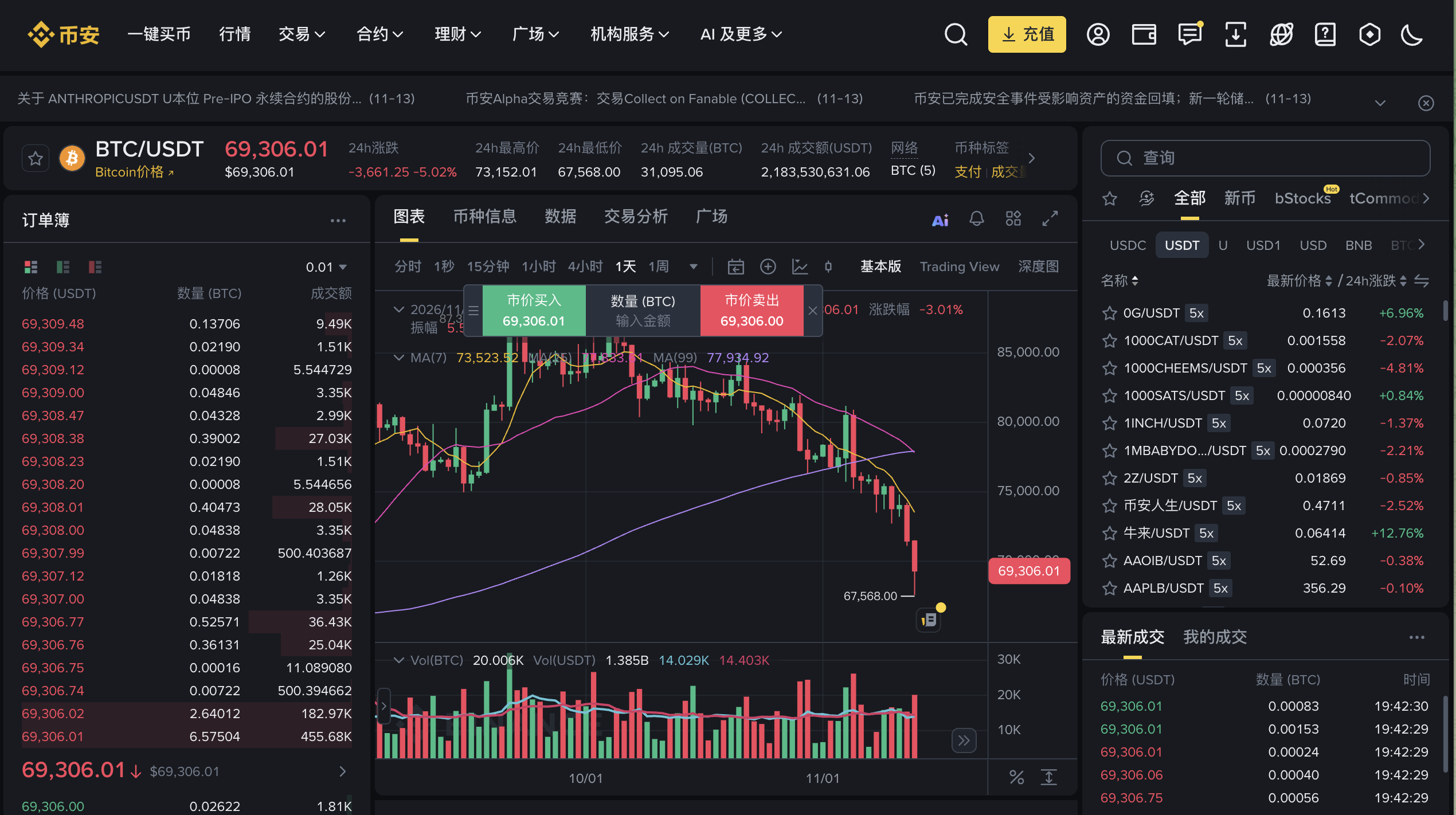
According to The Block’s November 13 market report , Bitcoin fell to around $68,408, losing approximately 7% over 24 hours, while Ethereum declined by roughly 6%. CoinGlass data cited in the report showed about $1.47 billion in crypto derivatives liquidations during the same period, including approximately $1.31 billion in long positions.
Those liquidation figures matter because they help explain why crypto prices can fall so quickly once selling begins.
When prices decline, traders using high leverage may find their positions automatically closed. Those forced sales can push prices lower, triggering further liquidations and creating a chain reaction that makes an already weak market even more volatile.
But the pressure wasn’t coming from leverage alone, and some warning signs had appeared before Nvidia’s leadership announcement.
According to a November 12 report from CoinDesk , US spot Bitcoin ETFs had recorded five consecutive trading days of net outflows, totaling around $1.44 billion. In other words, money had already been leaving some institutional investment channels before the latest sharp decline.
This brought me back to something I’ve been thinking about for a while: the relationship between cryptocurrencies and traditional financial markets.
One of the ideas that originally attracted people to cryptocurrency was decentralization, along with the possibility of building ways to exchange value outside conventional financial institutions. But as ETFs, institutional investors, derivatives, and other financial products have become more involved in crypto, the market has also become increasingly connected to traditional sources of capital.
When interest rate expectations change, investors may become less willing to hold risky assets. Crypto can be particularly sensitive to those shifts because trading continues around the clock, leverage is widely used, and liquidity can thin out quickly during periods of stress.
In an earlier article, What Is Consensus in Crypto? From Bitcoin Pizza to Real-World Value , I explored why real consensus should involve more than the number of people holding a token or talking about it online. I was interested in the relationship between community belief, actual use, and the value a project creates.
Watching the market fall has made that question feel relevant again.
A cryptocurrency can have an active community and genuine use cases, yet its market price can still be affected by capital flows, investor expectations, and broader economic conditions. Rising prices alone don’t prove that a project has achieved lasting success, just as a sharp decline doesn’t automatically make its underlying technology worthless.
I also don’t believe Huang’s resignation directly caused Bitcoin to fall. The two markets operate differently, and there isn’t enough evidence to make that kind of claim. What seems more plausible is that both were exposed, in different ways, to a wider change in investors’ willingness to take risks, while crypto’s own fund outflows and leveraged positions made its decline more severe.
What These Events Have Made Me Think About
Looking back at everything that happened over the past few days, I realize that my attention has shifted.
At first, I was following the controversy surrounding Huang and the reaction in Nvidia’s stock price, much like many other people. As the inflation figures and crypto market losses came into view, I started wondering why these different developments were happening so close together.
The more I looked into them, the more I felt that many of the pressures we’re seeing didn’t suddenly appear this week.
Nvidia’s dependence on its founder developed over decades. The enormous capital requirements of the AI industry have been building alongside the expansion of data centers and computing infrastructure. Inflation has a much longer economic history, and the leverage and liquidity issues in crypto certainly didn’t begin with this week’s market decline.
Sometimes a new event simply brings attention to problems that were already there, making investors reconsider risks they may have been willing to overlook when markets were rising.
That doesn’t mean every event is directly connected. Some developments genuinely influence one another, others reflect the same economic conditions, and some may simply happen at similar times. I don’t want to force every headline into a single explanation just because the timing makes the connection tempting.
What I keep coming back to is a question about the expectations that have helped drive AI and crypto valuations over the past few years. How much of the value investors are paying for has already been created, and how much still depends on what they believe might happen in the future?
A company can have excellent technology and growing revenue, yet its shares can still fall if investors have paid too much for that growth. A cryptocurrency can have a large, enthusiastic community without that enthusiasm being enough to support its market price indefinitely.
I don’t know where Nvidia will go from here, how long the current market weakness will last, or whether these events will eventually be remembered as the beginning of a larger change. Markets may settle down over the coming weeks, or new developments may bring other concerns into view.
What matters to me isn’t trying to guess the exact moment prices will recover. I’d rather understand what is driving the changes we’re seeing and what we may have overlooked while everything seemed to be moving in the same direction.
Eventually, the headlines about Huang’s personal life will fade. But the questions surrounding AI investment returns, borrowing costs, corporate leadership, and the growing connections between financial markets will still be worth asking.
We often start looking for the reasons behind an event only after it has happened. Yet some of the factors shaping today’s outcomes may have been developing long before anyone thought to write a headline about them.