September 18 memorial image with a mother and child, a white chrysanthemum, and the words Remember History, Cherish Peace.

September 18: Remembering History Without Passing Down Hatred

Every year on September 18, when I hear the air-raid sirens outside — three times, three minutes each — I feel a heaviness settle in me. It may look like just another date on the calendar, and life still goes on as usual: we get up, take our children to school, go to work, and deal with all the ordinary things that fill a normal day. But in 2026, it has been 95 years since that night in 1931, and I still believe this is a day we should stop and remember. ...
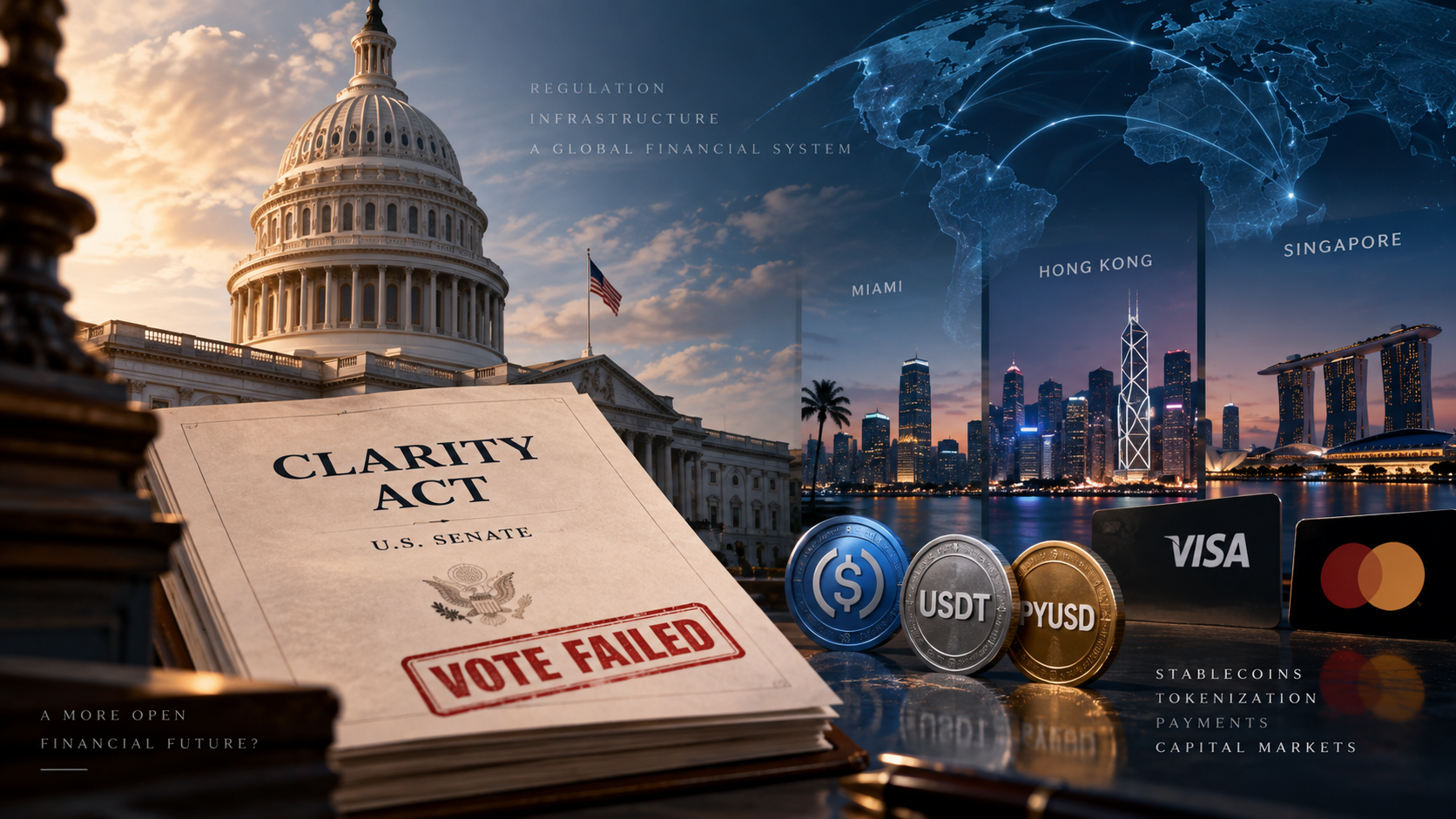

Editorial illustration of the CLARITY Act, U.S. Capitol, stablecoins and global financial centers representing crypto’s move into financial infrastructure.

Crypto Is Becoming Financial Infrastructure: Why the World Was Watching the CLARITY Act

Ahead of the September 15 vote, Senator Cynthia Lummis posted a blunt message on X. After months of negotiations, she argued that the latest version of the CLARITY Act had already incorporated many Democratic requests and that it was time to stop negotiating and vote. The revised text did include 126 substantive changes sought by Democrats, including tighter restrictions related to public officials and crypto conflicts of interest, according to Reuters’ reporting on the final draft of the bill . Even so, disputes over ethics, banking and financial stability remained unresolved going into the vote. ...

Mother and young son sitting together by a window at sunset, illustrating a personal journal about motherhood, communication, and understanding a growing boy.

As a Mother, I’m Still Learning How to Understand My Son

I used to think I would be the kind of mother who rarely lost her temper. I imagined myself as calm, patient, and good at communicating with my child. I would listen carefully, explain things gently when he was upset, and manage my own emotions before they ever reached the point of anger. I had read so much about parenting that I genuinely believed that, if nothing else, I would at least be good at talking things through. ...

A creator working at a desk while continuing an uncertain but meaningful building journey

I’m Still Building, Just Not for the Numbers

It has been almost a month since I last updated Flowanriver. I did not stop because I wanted to give it up; I simply did not find anything during this period that I genuinely wanted to write about. There were topics I could have followed, trends I could have commented on, and certainly things I could have written because they were easier to rank or more likely to be indexed by Google. But every time I tried to approach writing from that direction, I felt something was off. I did not want to publish something just to keep the site active, or choose a topic simply because an algorithm might prefer it. ...

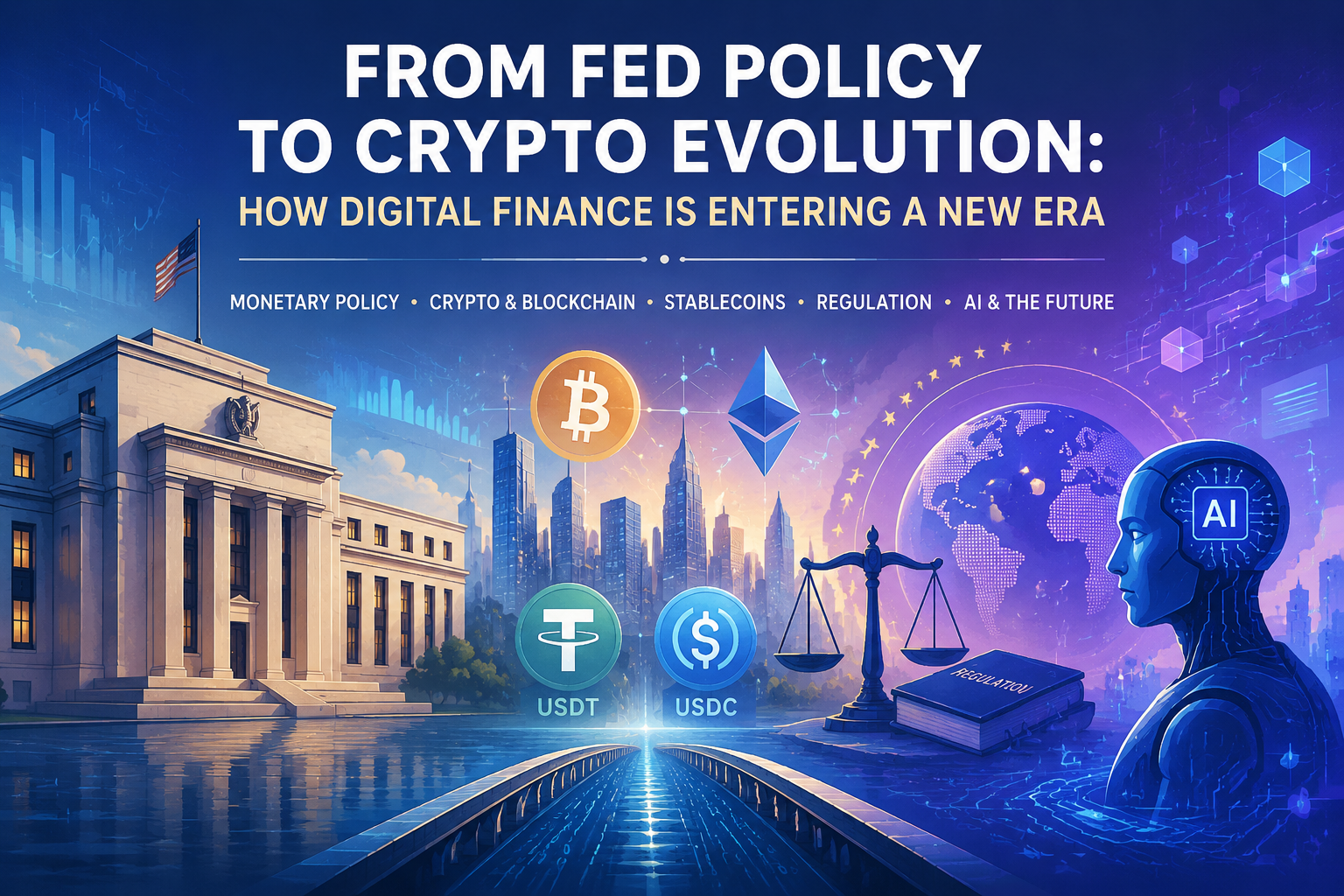
Illustration showing the evolution of digital finance from Federal Reserve policy and crypto markets to stablecoins, regulation, and AI-powered blockchain technology

From Fed Policy to Crypto Evolution: How Digital Finance Is Entering a New Era

Over the past few years, the crypto industry has undergone a significant transformation. In its early stages, crypto markets were largely driven by Bitcoin’s price movements and investment demand. Many users entered the market primarily because they saw digital assets as a new form of investment opportunity. However, as blockchain technology has continued to develop, the focus of the industry has gradually shifted from individual asset prices toward broader digital asset ecosystems. ...

A person stands among iridescent bubbles containing abstract AI networks as one bubble begins to burst, symbolizing the gap between AI’s potential and human expectations

The AI Bubble Is Still a Human Bubble

This week, I listened to an interview with Chinese technology investor Wang Yuquan, who made a prediction designed to attract attention: the AI bubble could burst around 2029. The exact year matters less to me than the reasoning behind it. Wang is not arguing that AI has little value. He is arguing almost the opposite: AI’s long-term potential is so significant that we may be pricing years of social and economic change into the present. ...

Conceptual illustration of artificial intelligence and human values, inspired by Yuval Noah Harari’s AI lecture, showing a person reflecting on creativity, judgment, and the future of humanity.

When AI Becomes More Powerful, What Makes Us Human? — Reflections After Watching Yuval Noah Harari’s Latest AI Lecture

Recently, I watched the latest lecture by Yuval Noah Harari, the author of Sapiens: A Brief History of Humankind, at the University of Oxford, titled “AI Has Hacked the Code of Human Civilization. ” In the lecture, Harari raised a thought-provoking question: as AI begins to enter areas that were once considered uniquely human, how will our role in society change? According to Harari, human civilization is essentially a network built on information and shared stories. Nations, laws, companies, currencies, and religions are all systems that exist because people collectively believe in them. For thousands of years, humans have been the creators, storytellers, and interpreters of these systems. ...

A calm evening scene of a person looking at a city skyline by the river, representing personal reflection on how AI and digital economy are reshaping work and life.

What kind of new system are we actually entering in the era of the digital economy?

The digital economy is being redefined by AI Recently, while following discussions around the Digital Economy conference in Beijing, I had a very strong impression that although the theme is still labeled as “digital economy,” the real focus has quietly shifted toward artificial intelligence. From what I have seen across different public information, whether it is industrial direction, enterprise digital transformation, or talent development systems, AI is being mentioned more and more frequently. The term “digital economy” still exists, but it no longer feels like a simple extension of the internet era. Instead, it feels more like a broader framework that is now carrying AI, data systems, and industrial restructuring together. ...

A quiet desk with a notebook and coffee, reflecting on retirement, crypto, and what the future holds for our generation.

When Pension Funds Start Looking at Crypto, I Find Myself Thinking About Something Else

A few days ago, while going through crypto news, I came across a story about a Japanese corporate pension fund considering allocating around 1% of its assets to cryptocurrencies. At first, I thought it would be another article about Bitcoin adoption. But the more I thought about it, the more I realized that wasn’t what interested me. The question that stayed with me was much simpler: What will retirement look like for our generation? ...

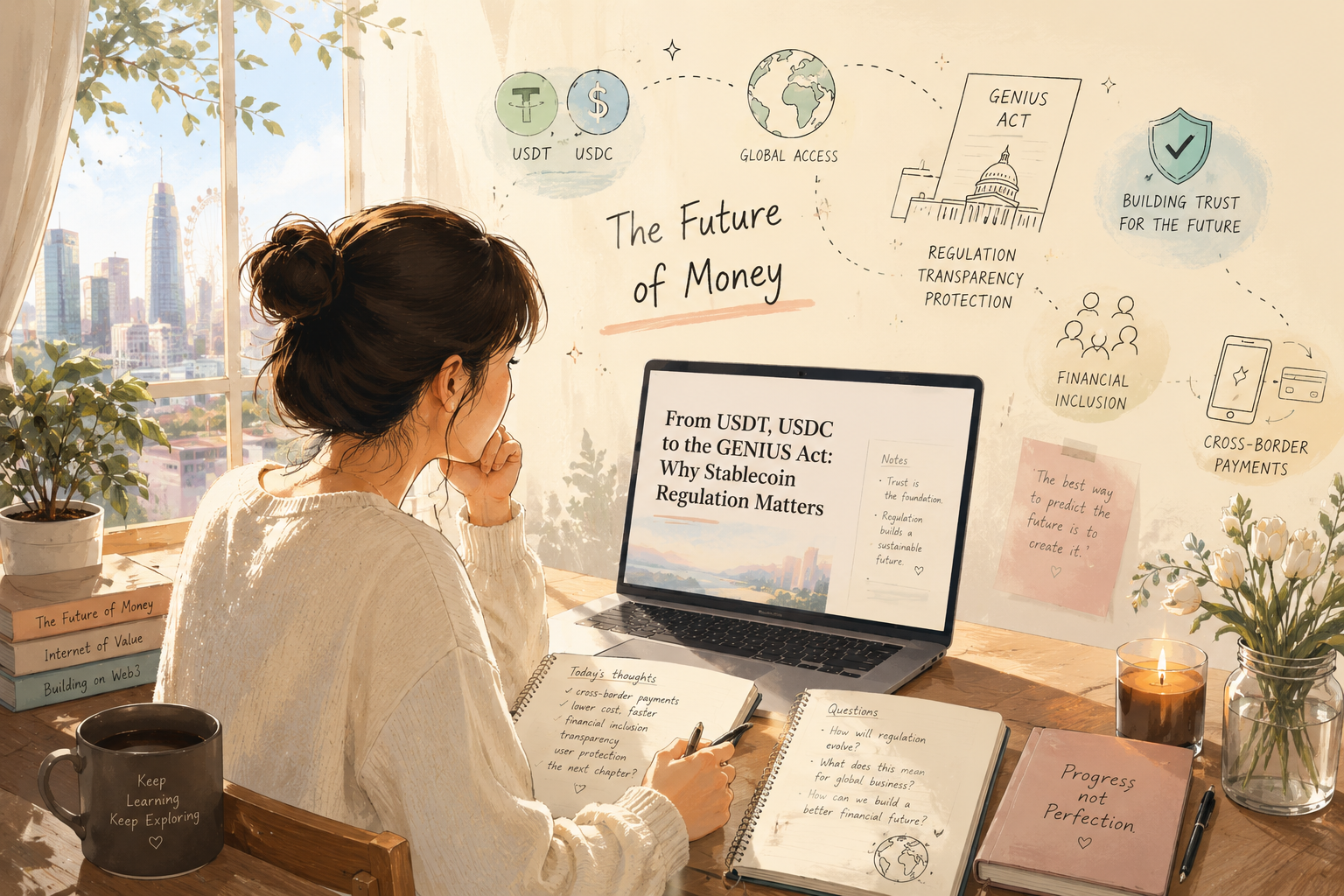
A visual representation of stablecoin regulation across the US, Hong Kong, and Singapore — USDT, USDC, and the GENIUS Act explained for beginners.

From USDT and USDC to the GENIUS Act: Why I Started Paying Attention to Stablecoin Regulation

After spending time learning about USDT and USDC, I thought I had finally figured out the stablecoin story. One is used almost everywhere. The other is often associated with transparency and compliance. That seemed to be the main difference. But it turned out I was only looking at the surface. As I started following more crypto news and industry discussions, I noticed that people were talking less about USDT and USDC themselves and more about something else: regulation. ...